

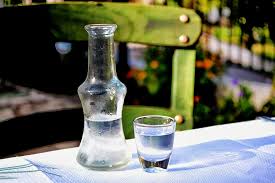
Since ancient times, people have tried to make strong alcoholic beverages from whatever was at hand.
In Bulgaria and other Balkan countries, residents made rakia, palinka, and vodka from whatever sugary ingredients were at hand—grapes, plums, apples, raspberries, and so on.
And what about the Greeks?
The most common sugar-containing fruit in this country is grapes. So people wondered: what else could be made from the pomace left over after pressing grapes?
History doesn’t reliably know the name of the person who first distilled raki in Greece. But today, it is a truly traditional Greek drink with an alcohol content of 35 to 45 degrees.
When asked how much alcohol is in raki, Cretans often answer: 21%. But that’s… Cretan percent!
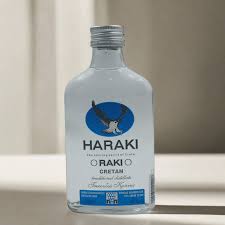
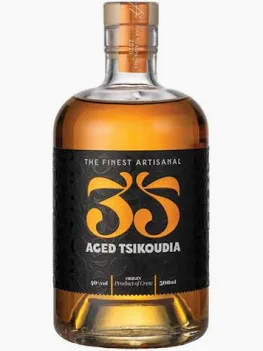
On mainland Greece, locals call raki “tsipouro,” while on Crete, they call it “raki” or “tsikoudya.” Unlike Turkish raki, Greek raki doesn’t have an anise flavor. Greek ouzo is closer to the Turkish drink.
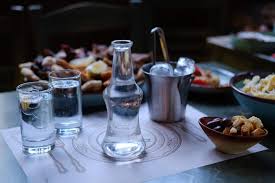
Today, raki is ubiquitous in Crete. It’s probably impossible to spend even a couple of days on the island without being offered raki by locals.
Almost every family on the island distills raki. Raki stills, or “rakokazano,” are found in every village. To obtain raki, you need to obtain a permit from customs. For family use, this is not a complicated process.
Each family has its own taste for this drink. Sometimes it’s delicate, sometimes reminiscent of moonshine, sometimes light as nectar, and sometimes strong as moonshine.
But be that as it may, raki is a living product. If a kind, warm, and positive person distills raki, they will have a delicate and light drink. But if an envious or unkind person makes it, the drink will be heavy, and the next morning your head will hurt, as if they’d tested an atomic bomb.
Cretans traditionally used raki to make various medicines and potions for internal and external use, but I’ll discuss that in another post.
Tourists often ask me: what’s the difference between Italian grappa and Cretan raki?
Typically, grappa is aged in barrels for a while and then drunk, while in Crete, raki is drunk straight from the still. Therefore, for many, raki has a simpler, more straightforward taste than grappa.
But I prefer raki – an ancient Cretan drink as straightforward and simple as the soul of a Cretan, as mysterious as the island of Crete itself!
No responses yet